

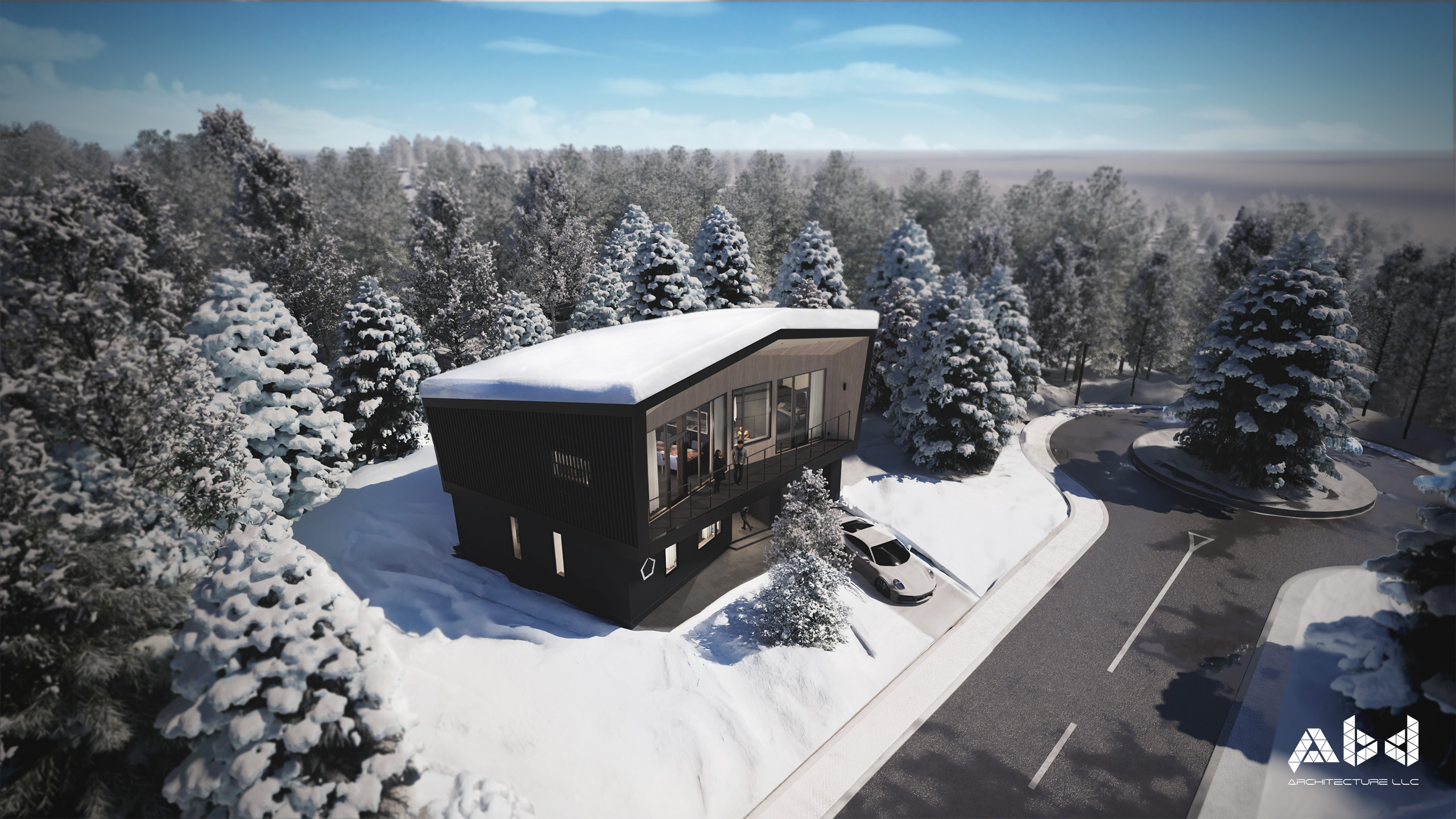


The project is located within the sought-after Odin Hills development, a premium 92-plot residential enclave with shared onsen and pool facilities in the international ski resort of Niseko, Hokkaido. Just five minutes by car from the Hanazono ski hills, the site combines convenient access to winter recreation with a calm setting and expansive views toward Mount Yotei.
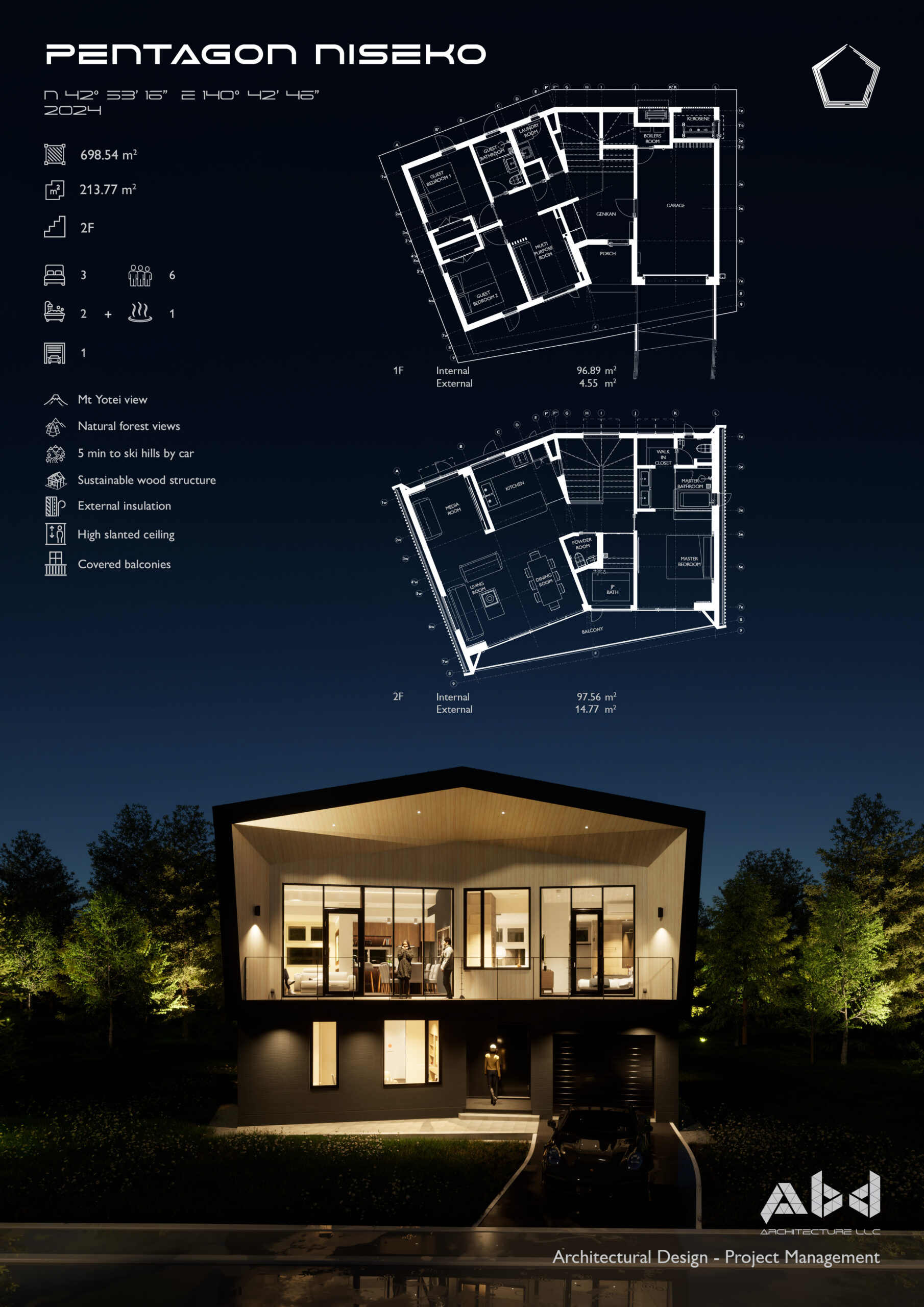
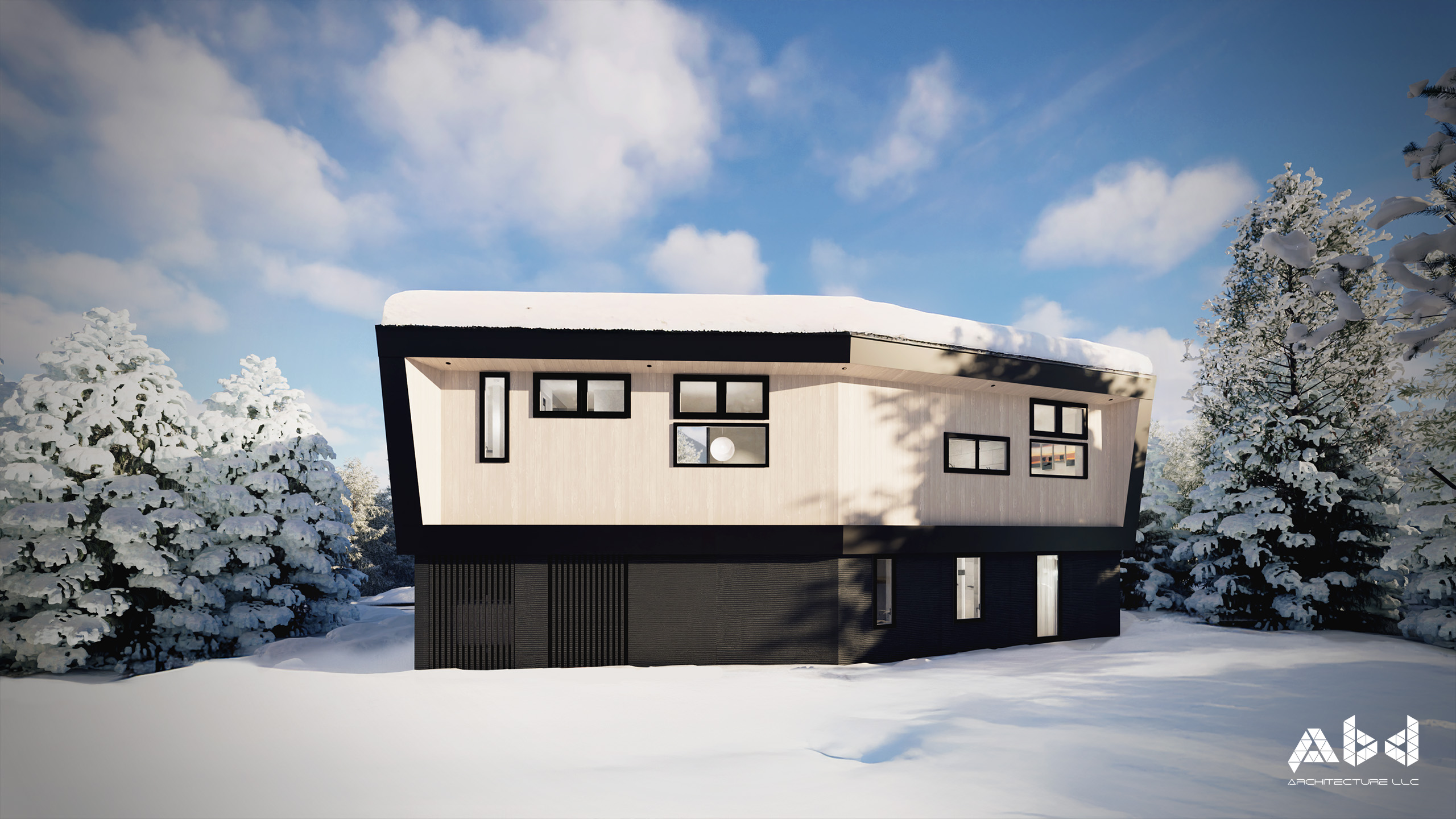
Conceived as a contemporary alpine residence, the design responds directly to its site, climate, and long-distance views. The building departs from a conventional orthogonal layout and is organized around a pentagonal plan—a deliberate spatial strategy that allows the architecture to orient toward multiple key vistas while maintaining privacy, compactness, and efficient circulation.
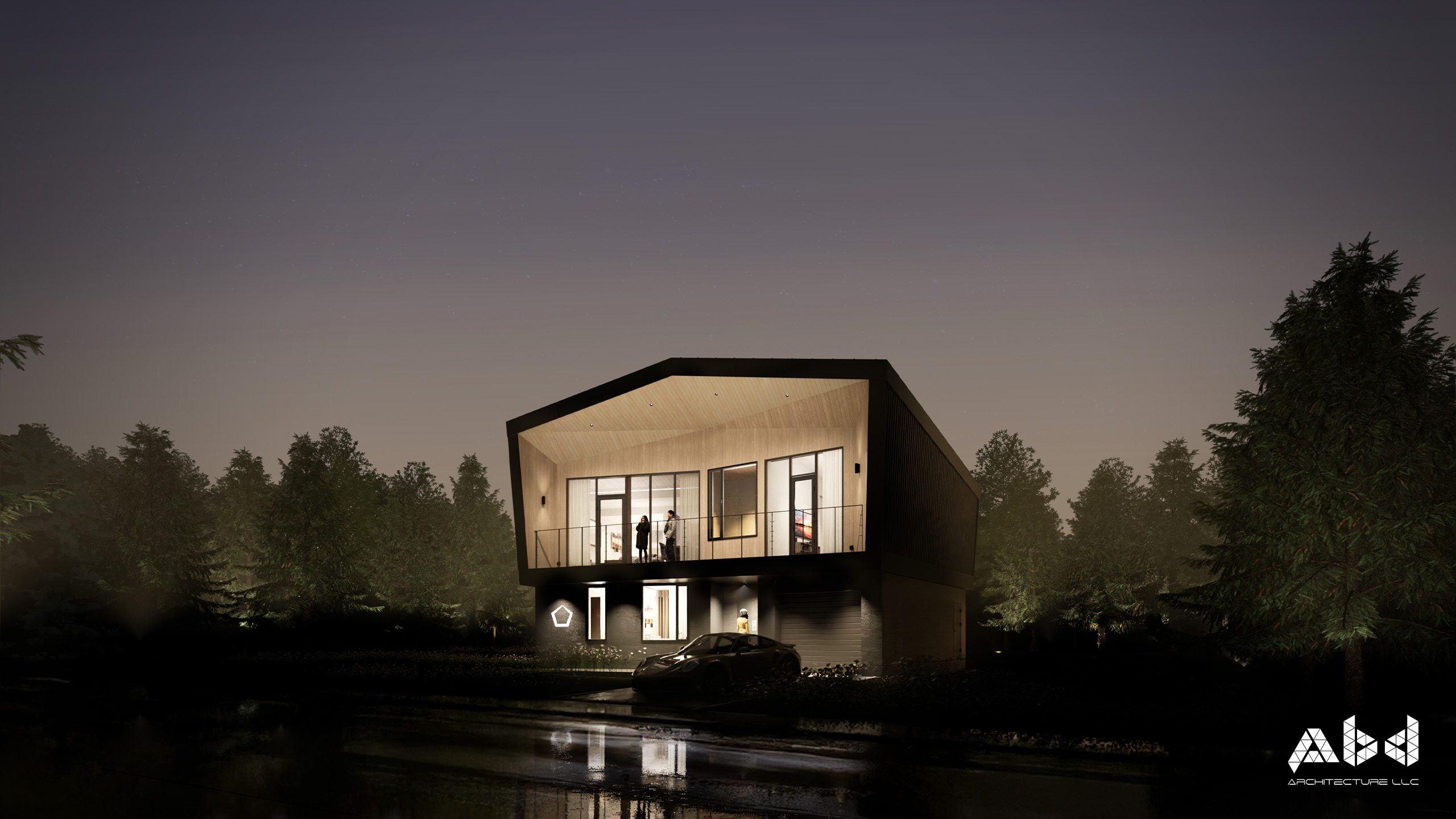
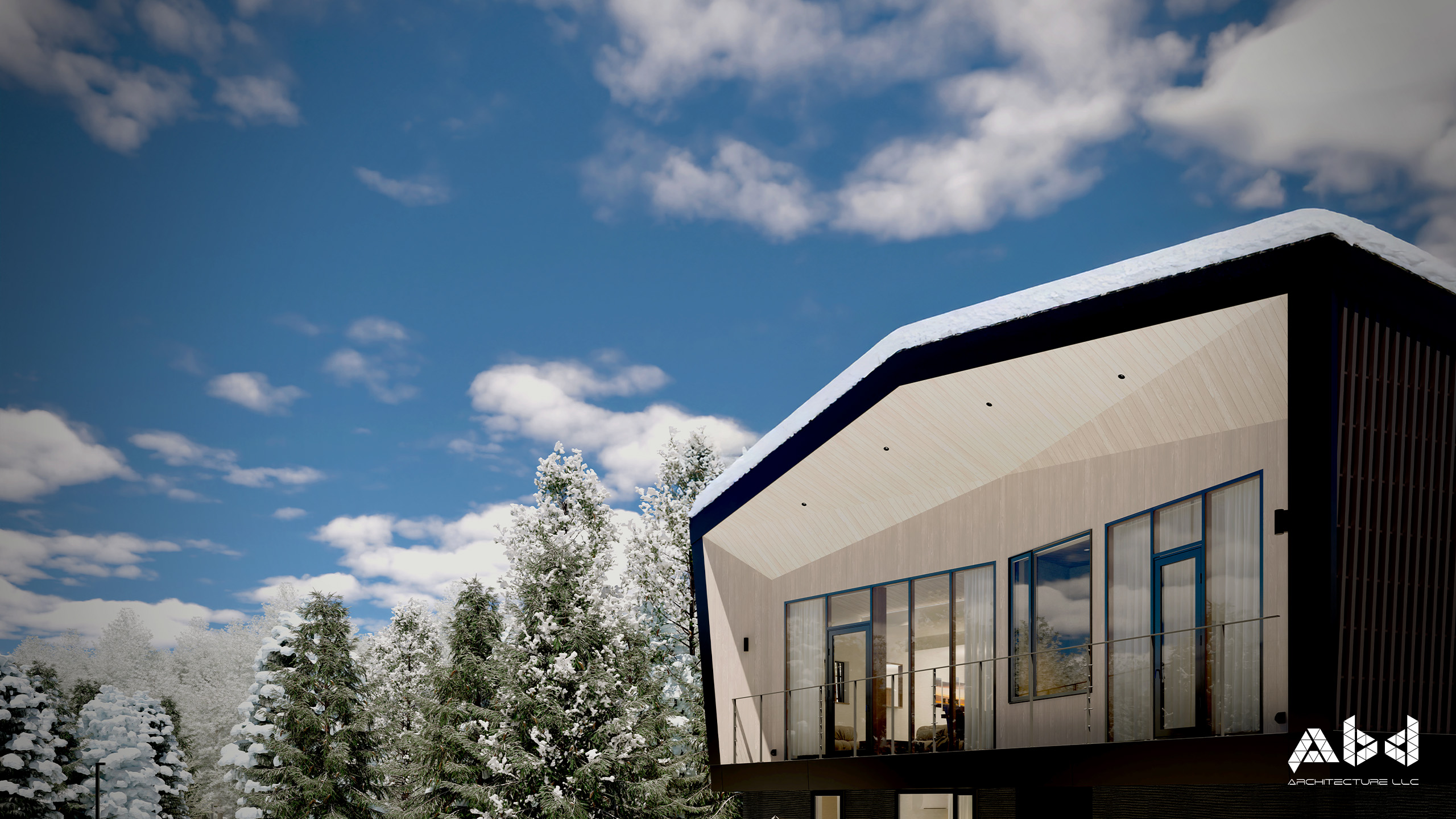
The pentagonal geometry is shaped to frame two primary views: Mount Yotei across the road and the town of Kutchan beyond. Subtle façade angles open the interior toward these landscapes, while a continuous balcony and cantilevered roof complete the pentagon in the horizontal plane. Vertically, the form is reinforced by a continuous metal outline framing the upper level and emphasized by expansive glazing. A centrally positioned stair in the rear corner of the polygon creates a compact layout and dynamic visual connections between floors.
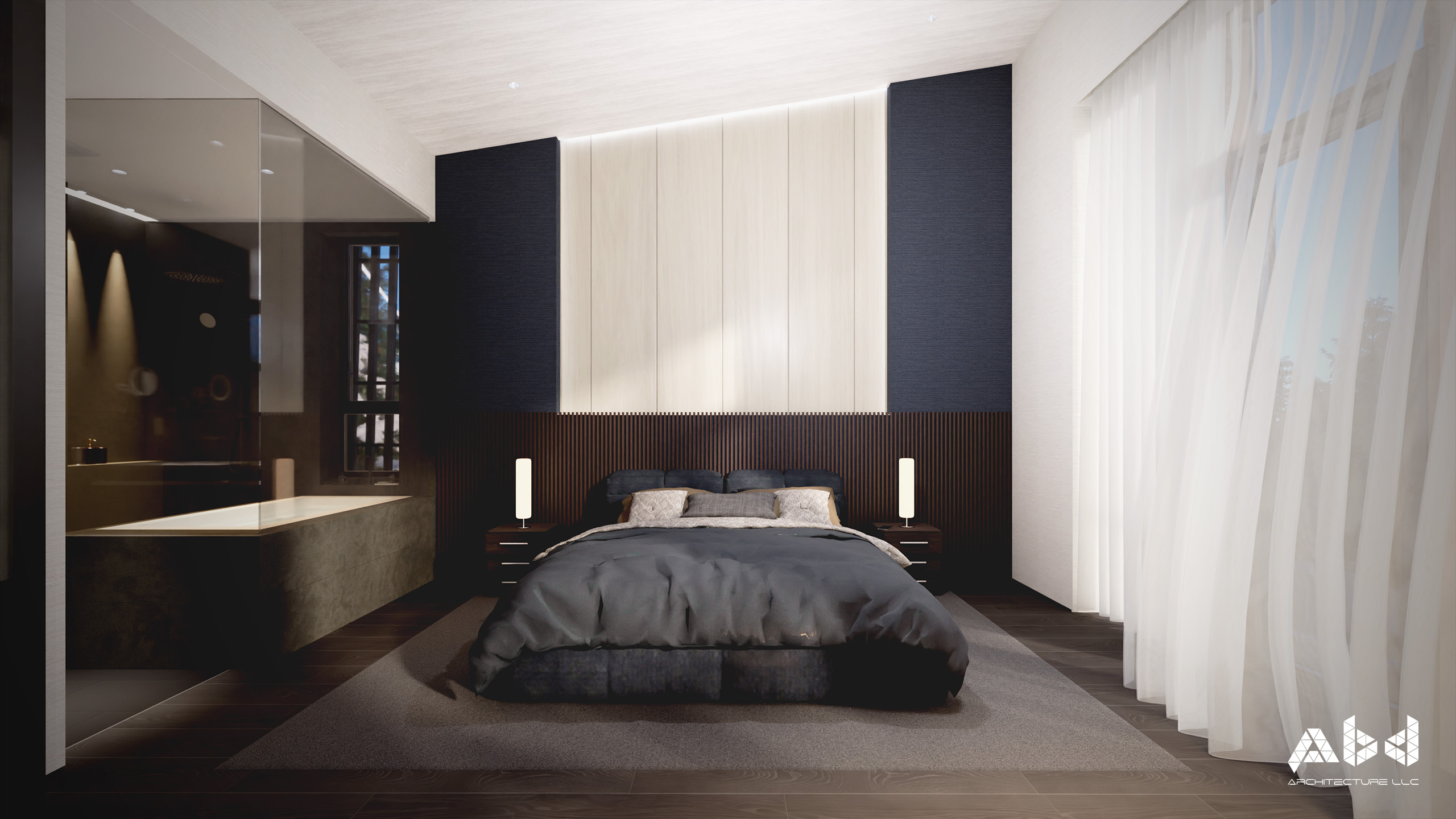
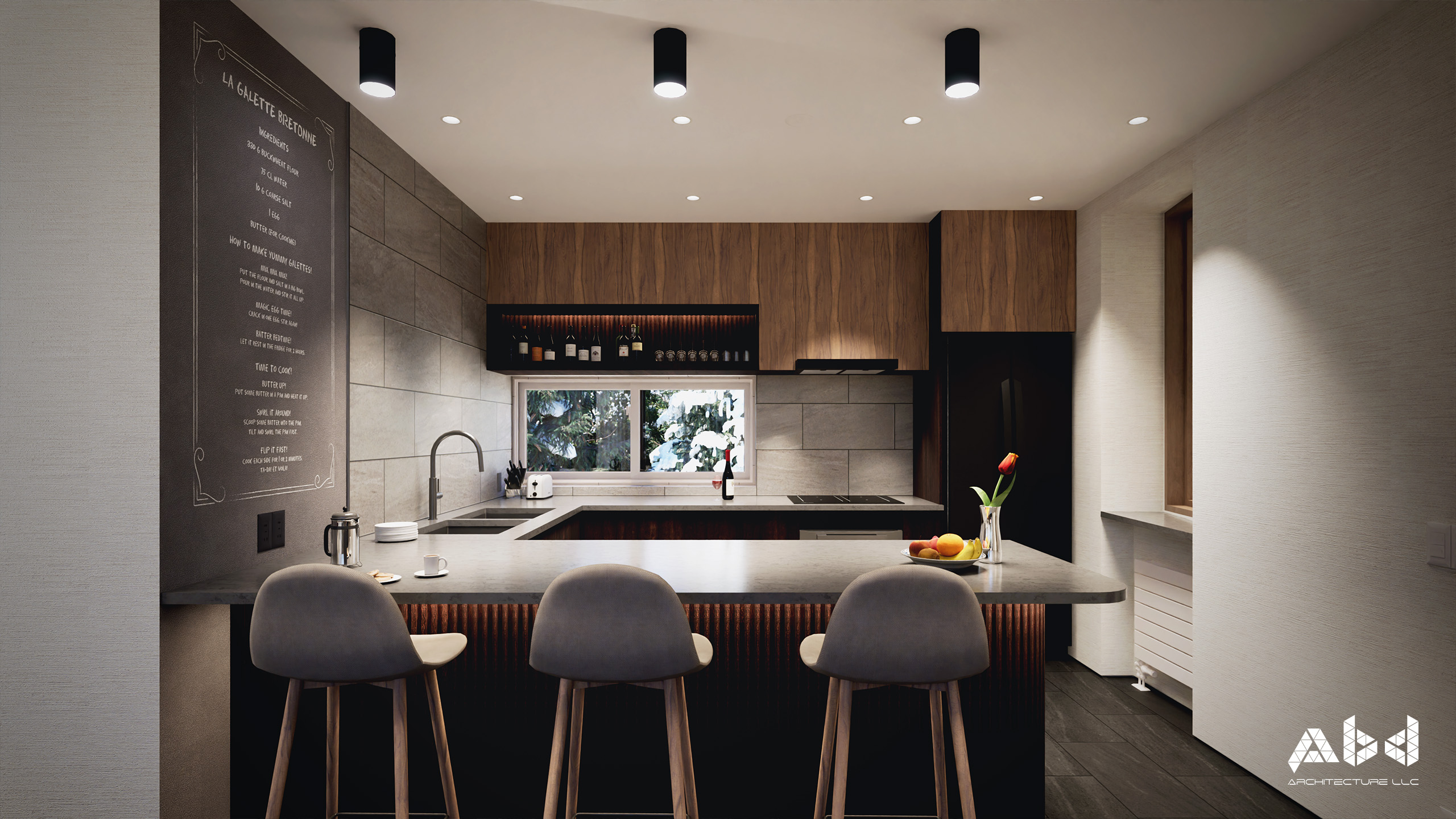
The ground floor is designed for the practical needs of a refined ski residence, with a single-car garage and ski storage, a traditional genkan, laundry and multipurpose spaces, a shared bathroom, and two comfortable bedrooms. The upper floor forms the main living level, divided into distinct zones: a master suite oriented toward Mount Yotei, a light-filled living–dining space with open kitchen and panoramic views, and a flexible media room. A generous front-facing balcony connects the living areas and master bedroom to the outdoors.
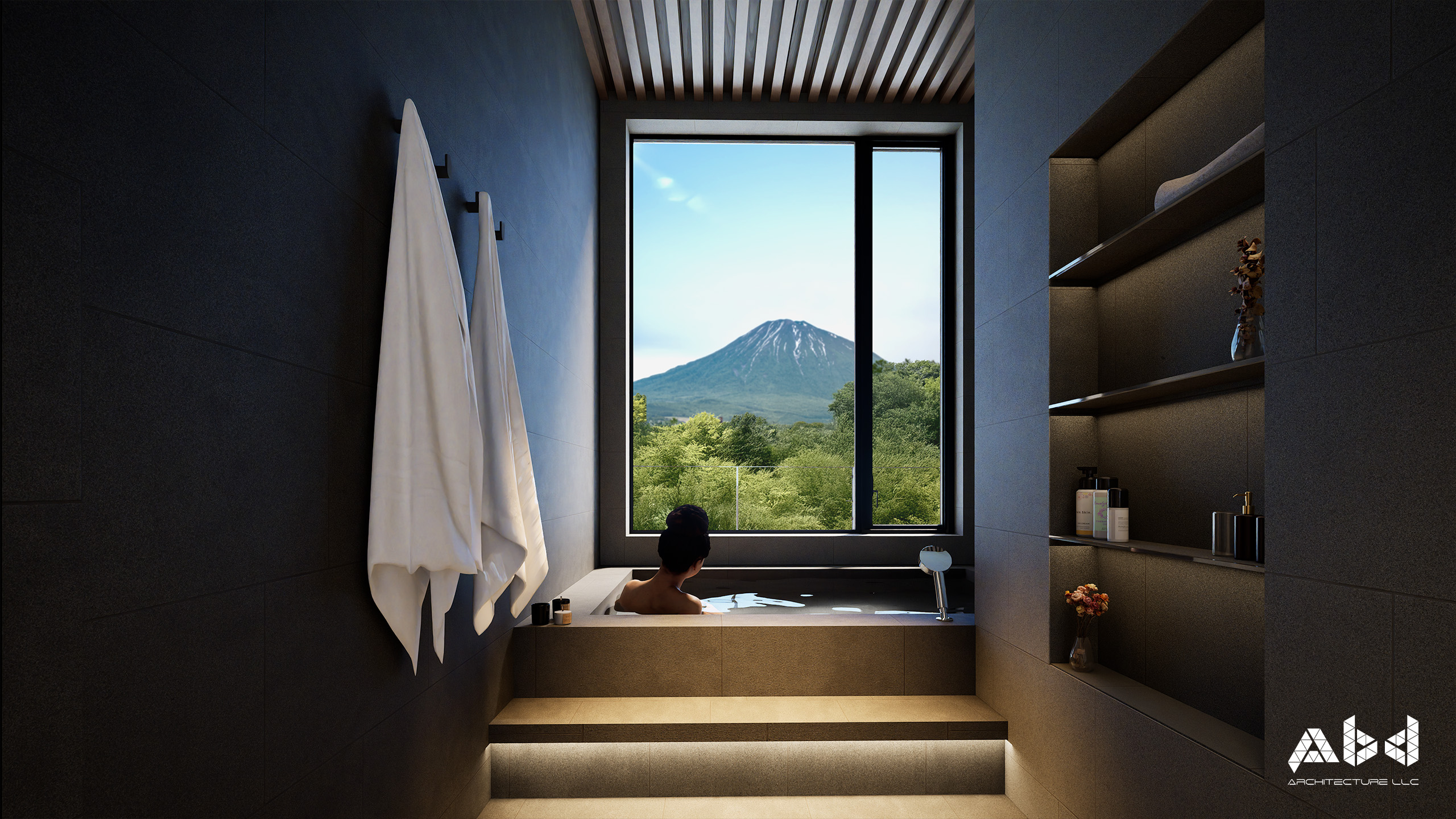
At the heart of the upper floor, a traditional Japanese tiled bath is oriented toward Mount Yotei, offering a calm, meditative retreat. Architecturally, the house is defined by a grounded, protective lower level and a lighter, expressive upper volume that projects outward. Cedar cladding, black metal accents, and recycled timber louvers articulate the upper floor, while the base is finished in black Japanese stucco, anchoring the building to its alpine context and ensuring durability in Niseko’s harsh winter climate.